October 9, 2026
Nemba Invasive Tree Removal: Protecting Cape Town's Natural Landscape
By @mynembainvasivetreeremovalnews
Understanding the Threat of Invasive Trees in Cape Town
Living in Cape Town means sharing space with one of the world's most biodiverse regions. But that diversity faces a real threat from invasive tree species. I have seen it firsthand while working on properties across the Cape Peninsula: aliens like rooikrans, wattle, and gum trees that spread fast, crowd out native plants, and drink groundwater faster than winter rains can replenish. Left unchecked, they alter fire regimes and push out wildlife. That is why nemba invasive tree removal has become an essential service for landowners and conservation-minded residents alike.
Why Invasive Trees Demand a Different Approach
Removing an invasive tree is not like taking down a sick pine in the backyard. Invasive species often grow in dense stands, have aggressive root systems, and resprout from stumps if you only cut the trunk. A single missed coppice shoot can undo a season of work. That is where professional removal methods matter. A proper site assessment by a qualified arborist evaluates tree size, tree location, and tree species to decide the safest and most effective way to clear the land. Without that upfront evaluation, you risk damaging structures, injuring people, or leaving the job half done.
I have seen homeowners try chainsaw work on their own only to discover a hidden lean or a weakened trunk that could have crushed their garage. Invasive trees, especially those that have grown unchecked for years, can be unpredictable. Their wood may be brittle, their canopies unbalanced. A professional tree service brings not just the chainsaw but also the experience to read the tree's behaviour and the right safety gear to handle the unexpected.
The Role of Nemba Invasive Tree Removal in the Local Landscape
Organised programmes such as nemba invasive tree removal have been running on the Cape Peninsula for years. They coordinate between private landowners, city reserves, and volunteer groups to systematically clear invasive stands. The goal is not just tree removal but ecological restoration. After the tree felling phase, the real work begins: treating stumps to prevent regrowth, mulching or removing the biomass, and often replanting with indigenous species. A good contractor will include full cleanup as part of the service, hauling away debris and leaving the site safe and tidy.
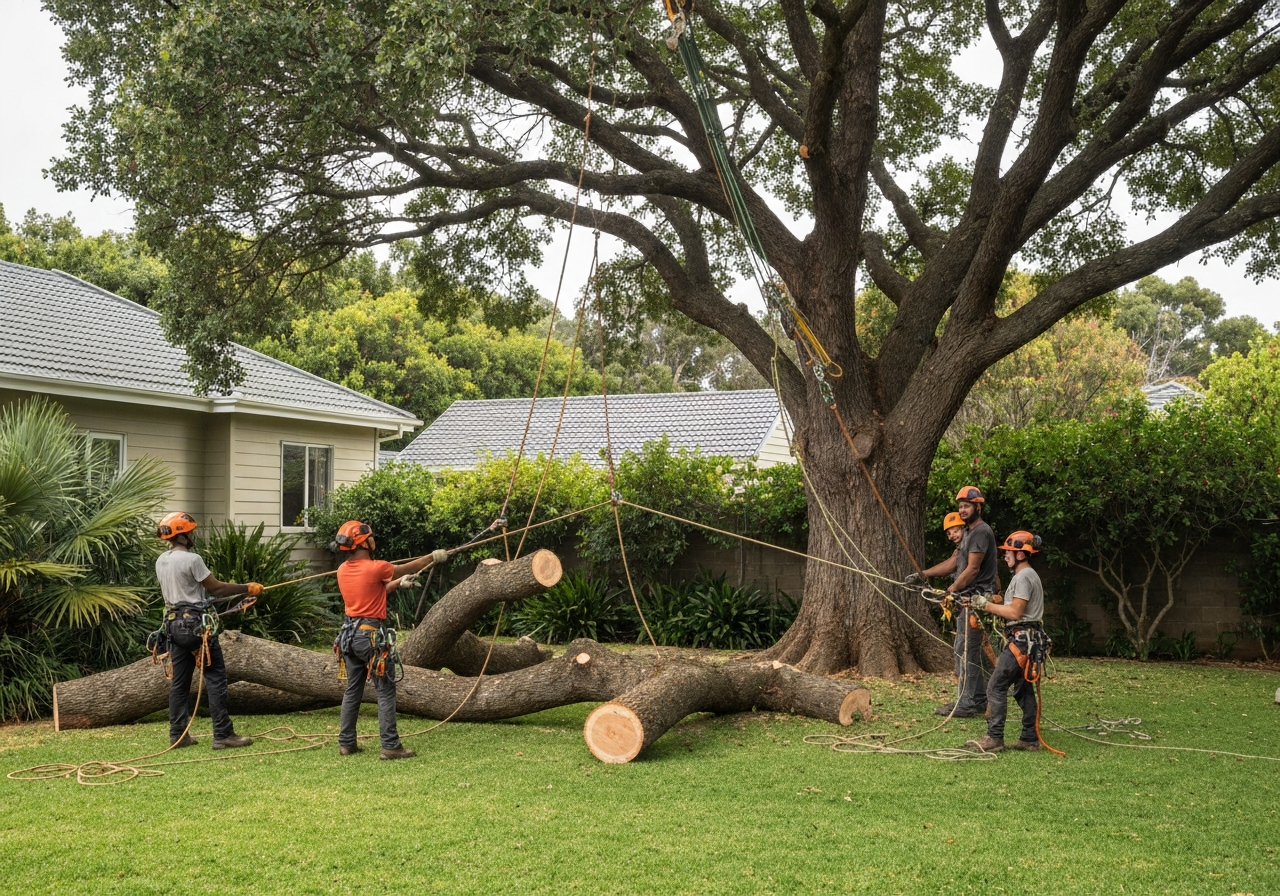
One job I worked involved a dense wattle infestation behind a residential block in Constantia. The trees were mature, some over eight metres tall, and they had created a thick canopy that blocked light from reaching the fynbos below. A standard tree removal would have left the stumps to resprout within weeks. Instead, we performed a complete land clearing operation: felling each tree with directional cuts, grinding every tree stump below grade, and removing all slash. The stump grinding step is critical because it eliminates the resprouting threat and also breaks up the root mass so the ground can be levelled for replanting.
What a Typical Nemba Invasive Tree Removal Project Looks Like
- Initial site assessment: The arborist walks the property, notes the invasive tree species present, measures tree size and tree location, and checks for hazards like power lines or steep slopes.
- On-site quote: Pricing depends on the number of trees, their size, accessibility, and whether stump grinding or full cleanup is needed. You get a firm price before any chainsaw starts.
- Tree felling and removal: Using chainsaws, rigging, and sometimes cranes for tight spots, the team brings down each tree in a controlled manner.
- Stump grinding and cleanup: The stump is ground down, debris is raked, and all material is either recycled as woodchip or hauled away. Full cleanup means you are left with bare ground ready for the next step.
Balancing Efficiency with Environmental Impact
There is always a trade-off between speed and care. Heavy machinery can clear a hillside fast, but it compacts soil and damages root systems of nearby desirable trees. Hand felling and manual removal take longer but leave the ground structure intact. A good tree service will discuss these trade-offs with you, explaining why a particular method suits your site. For example, on a slope in Simon's Town, we chose to fell trees by hand and use a winch to lower trunks to the road, avoiding the need for a large vehicle that would have eroded the path.
Invasive tree removal also has a direct environmental impact beyond the immediate site. Clearing dense stands of alien trees can reduce wildfire fuel loads significantly. The fires that swept through parts of the Cape Peninsula in recent years burned hotter and faster because invasive pines and gums had created continuous fuel. Removing them is one of the most effective ways to protect both wildland and urban edges.
Working with a Professional Arborist
If you are considering an invasive tree removal project, start with a reputable arborist who knows Cape Town's invasive species. They should be insured, carry the right safety gear, and be willing to give you an on-site quote after walking the property. Avoid companies that quote over the phone without seeing the site; tree size and tree location affect the work too much for a remote estimate to be accurate.
Ask about their approach to stump grinding. Some operators just cut the trunk flush with the ground and call it a day. That is not enough for invasive species. You need the stump ground at least 20 to 30 centimetres below the soil surface, and the arborist should treat the cut surface with a registered herbicide if local regulations allow it. Full cleanup should be part of the agreement, not an extra you discover later.
Looking Ahead: Keeping Your Land Clear
Once the invasive trees are gone, the work does not stop. Seed banks in the soil can germinate for years after the parent trees are removed. Regular follow-up visits, every six to twelve months, are wise. Some landowners choose to replant with indigenous groundcovers and shrubs that outcompete new invaders. That is where the true value of professional removal shows: it gives your native garden a fighting chance.
Nemba invasive tree removal has shown that a coordinated, professional approach can reclaim large areas from alien domination. Whether you manage a small suburban plot or a larger farm in the Cape Flats, the principles are the same. Assess the site, choose the right method, remove the trees completely, and maintain the cleared area. With the right team and a clear plan, you can restore your piece of the Cape Peninsula to what it was meant to be: a place where fynbos, birds, and people can thrive together.
❧